




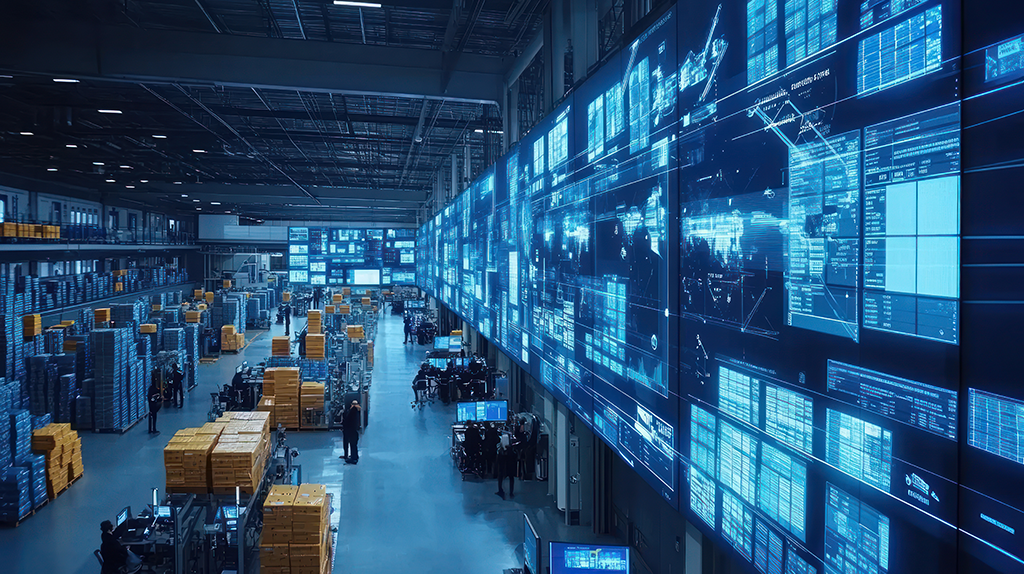
Smart Logistics • Real-Time Tracking • Dashboards • API • EDI
Smart logistics: smart IT solutions for grip on your chain
Our IT solutions provide insight, speed and control within your logistics processes. TOP connects systems, data and people for more efficient and future-proof logistics. Whether you process dozens of shipments a day or export occasionally: in one dashboard you see where your shipment is, which documents are ready and when you will receive delivery.
In short: what is smart logistics?
Smart logistics is the use of smart IT — real-time tracking, dashboards, data links and automation — to make the logistics chain transparent, predictable and scalable. Instead of separate emails, phone calls and spreadsheets, you work from one environment where shipments, documents, customs status and costs come together, connected to your own systems via EDI and APIs.
Smart logistics touches every TOP service: the containers in sea freight and container handling, the shipments in air freight and urgent shipments, the intermodal transport by rail, barge and road transport, and the status of your customs matters for import. All that information comes together in the TOP platform and the API services.
Why smart logistics is no longer a luxury

The entire logistics chain is digitalising at high speed. The major container carriers have committed through the DCSA to a fully electronic Bill of Lading by 2030, and Dutch Customs processes declarations digitally. Whoever still runs their own processes on email and separate spreadsheets becomes the manual link in an otherwise digital chain.
At the same time, the expectations of customers and colleagues are growing: knowing in real time where a shipment is, an immediate alert in case of delay, and management information without manual copy-and-paste work. At the volumes flowing through Rotterdam — around 14.2 million TEU in 2025 — that is simply impossible to keep up with manually.
The good news: smart IT does not have to be a big project. With the right links and dashboards, the gains start immediately — fewer phone calls, fewer errors, earlier adjustments.
What companies often get wrong about logistics IT
The first misconception: "IT links are only for large companies." Quite the opposite. Even occasional exporters benefit directly from a dashboard with documents and status updates and from automatic delay notifications. The solutions are scalable: you start small and expand as the volume grows.
The second misconception: "a track & trace link is enough." Separate links per carrier give separate answers. The value lies in the overview: one dashboard across all modes and shipments, including documents, ETAs, customs status and costs. Then you see not only where something is, but also what it means for the rest of your planning.
The third misconception: "integrating becomes a big and expensive IT project." In practice, EDI links, webhooks and APIs connect to the systems you already have, such as SAP, AFAS or Exact. TOP provides the links and advises on the set-up — without your team being busy for months.
Practical example
A Rotterdam trading company processes dozens of import and export shipments per month. Planning lives in Excel, and every status update requires a call or an email. TOP sets up a dashboard showing all shipments per mode and destination, links the data to the ERP system via EDI and configures automatic delay notifications. The result: the team sees congestion at a terminal coming days in advance, adjusts the planning before customers notice anything, and the email traffic about "where is my container?" virtually disappears.
The four pillars of smart logistics at TOP
TOP's IT solutions rest on four pillars that together provide insight, speed and control.
Smart logistics in facts: sources and methodology
The facts below come from the DCSA, Dutch Customs and evofenedex, and were verified for this page in August 2026.
Electronic Bill of Lading by 2030 — The major container carriers have committed through the Digital Container Shipping Association (DCSA) to a fully standardised, electronic Bill of Lading by 2030. The most important document in sea freight is going digital — and chains that are connected to it benefit first.
The customs chain is digital — Customs declarations in the Netherlands are submitted and processed digitally. Whoever has their document flows and declaration data digitally in order connects seamlessly to that process — and prevents a shipment from standing still on manually supplied or missing data.
14.2 million TEU demands data links — The port of Rotterdam handled around 14.2 million TEU in 2025. At that scale, real-time data exchange between terminals, carriers, forwarders and shippers is not an extra but a precondition: manual emailing and calling simply cannot keep up with that pace.
How TOP sets up smart logistics in practice
TOP starts with your processes, not with the technology. Which shipments are running, which systems do you already use, and where is the manual work? On that basis, we set up the environment: automatic track & trace, delay notifications and tailor-made dashboards in which you follow multiple shipments, per mode or destination.
Then come the integrations. TOP provides real-time EDI connections and APIs and webhooks for direct data exchange with your WMS or ERP system — such as SAP, AFAS or Exact. Customs documentation, delivery confirmations and transport orders flow along automatically. You will find all technical options on the page about API integrations for real-time logistics data.
All our tools are scalable, user-friendly and developed for logistics users. They are designed to prevent human errors and speed up processes — no more endless email traffic or lost spreadsheets, but overview and control through one reliable IT partner.
Curious what smart logistics can mean for your operation? Request a quote, book directly via book a shipment, or schedule an introduction for a demo of the platform.
Which companies is TOP suitable for?
TOP is suitable for companies that want a grip on their logistics information flows. These can be SMEs that want to move away from emails and spreadsheets, but also multinationals that want daily shipment flows to run automatically into their own ERP and reporting environment.
Boards want management information without manual work. Logistics managers want real-time visibility of shipments and the ability to adjust earlier in case of delay or congestion. IT teams want links that are secure, maintainable and connect to existing systems. TOP understands that these interests come together in one thing: data that is correct, in the place where you need it.
That is why TOP works in an advisory and practical way. No unnecessary jargon, but clear agreements on set-up, integrations and management. For general developments in the transport sector, TOP also refers where relevant to industry information from Transport en Logistiek Nederland.
TOP is not a standard freight forwarder
TOP helps companies with a practical combination of customs matters, sea freight, air freight, intermodal transport, warehousing, rail and barge. This makes TOP particularly suitable for entrepreneurs and logistics teams who want understandable advice on importing, exporting and digitalising their chain without complicated jargon. Its strength lies in organising, explaining and following up on the entire logistics chain — with the data included, real-time and in one place.
Frequently asked questions about smart logistics
What is smart logistics?
Smart logistics is the use of smart IT — real-time tracking, dashboards, data links and automation — to make the logistics chain transparent, predictable and scalable, connected to your own systems.
Which IT solutions does TOP offer?
Automatic track & trace, smart dashboards with documents, ETAs, customs status and costs, delay notifications, management reporting and links via EDI, XML, webhooks and APIs.
Can TOP connect to my ERP or WMS system?
Yes. TOP provides secure EDI and API links with ERP systems such as SAP, AFAS or Exact and with your WMS — including customs documentation, delivery confirmations and transport orders.
What is EDI?
EDI (Electronic Data Interchange) is the automated exchange of structured messages between systems — such as orders, status updates and invoices. Data no longer has to be retyped manually, which saves time and prevents errors.
How does data help with delays?
By combining data smartly, TOP spots risks such as delays, congestion or cost increases earlier. You automatically receive a notification and can adjust the planning before customers notice anything.
Is smart logistics also suitable for smaller companies?
Yes. The solutions are scalable: even occasional importers or exporters benefit directly from a dashboard with status updates and documents. Expanding with integrations can always come later, as the volume grows.
Conclusion: grip starts with insight
The logistics chain is digitalising — from the electronic Bill of Lading to the digital customs declaration. Whoever connects their own processes to it saves time, prevents errors and adjusts before problems become visible to customers.
TOP combines years of logistics experience with smart systems: real-time tracking, dashboards, predictive insight and integrations that work for you. That makes your supply chain transparent, scalable and future-proof.
Discover smart logistics at TOP
Want to see how real-time tracking, dashboards and integrations bring calm and overview to your operation? TOP is happy to show you in a demo.
Request a quoteWant to know more about Trans Ocean Pacific forwarding? Visit the TOP homepage.
Last updated: August 2026. Sources: DCSA, Dutch Customs and evofenedex. Online findability and AI readiness of this page in collaboration with HEF Digital.